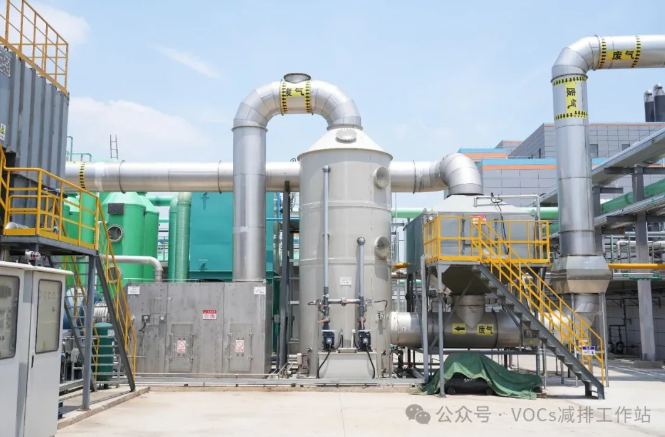
In modern industrial waste gas treatment, high-temperature incineration has gradually become the mainstream, especially in the field of VOCs waste gas treatment, where its purification efficiency can reach over 99%, meeting increasingly strict environmental protection standards. Compared with traditional high-temperature incineration methods such as absorption, adsorption, condensation and biological methods, it has significant advantages.
This article will delve into the selection criteria for regenerative thermal oxidation (RTO) and direct-fired thermal oxidation (TO), and conduct a comparative analysis of domestic and international standards.
01 Process structure and exhaust gas composition: Different components require different choices
The structural differences between RTO and TO make them perform differently when treating waste gas.
The RTO furnace consists of multiple units such as exhaust gas pipelines, switching valves, insulation modules, and regenerative ceramics. It is suitable for simple organic waste gas compositions,RTO,RTO incinerators,VCU equipment, regenerative incinerators, regenerative oxidation furnaces, and rco incinerators (RTO valves). If it mainly contains components of C, H and O. In these cases, the heat recovery efficiency of RTO can significantly save energy consumption.
For complex waste gas containing corrosiveness, viscosity, heavy metals or other impurities, the TO furnace is a more ideal choice.
Its simple structure can prevent clogging, corrosion and leakage problems, so it is safer and more reliable when dealing with these high-risk waste gases.
02 Exhaust gas concentration, the balance between safety and efficiency
RTO has strict limits on the concentration of inlet exhaust gas, generally requiring it to be lower than 25% of the lower explosive limit, and the maximum inlet concentration should not exceed 8000mg/m³. This is to ensure that the system can maintain safe operation while achieving efficient purification.
In contrast, the TO furnace can handle a wider range of waste gas concentrations. Due to its single airflow design, it does not need to consider valve switching and thermal balance issues, and its purification efficiency can reach 99.5% to 99.9%, making it suitable for the treatment of high-concentration waste gas.
03 Temperature control, flexibility comparison
When the RTO system is used for high-temperature exhaust gas treatment, pretreatment measures need to be installed to lower the temperature; otherwise, it may lead to valve deformation and leakage problems.
However, the TO furnace has no such limitation. Its system structure is not sensitive to temperature changes and can maintain the outlet temperature more stably without the need for additional temperature regulation measures.
04 Energy Consumption and Economy: Efficient Recycling or Direct Utilization?
In terms of energy consumption, RTO furnaces, with their ceramic heat storage bodies, can achieve a heat recovery efficiency of 95% or more. However, such efficient recycling requires a complex system and a relatively high initial investment.
The TO furnace is relatively simple. Its waste heat recovery efficiency is usually around 70%, but part of the heat can be used for other production processes, offering high flexibility.
05 Which is faster, temperature rise or production efficiency?
RTO requires a relatively long heating time. It takes about 2 to 3 hours to heat up a cold furnace, and 1 to 1.5 hours to heat up a hot furnace.
The TO furnace, with its simple structure and high-power burner, can quickly heat up to the working temperature, saving time and improving production efficiency. This is very beneficial for production scenarios that require rapid start-up.
06 The differences in selection criteria at home and abroad, and the balance between economy and precision
When choosing RTO or TO furnaces abroad, they often pay more attention to the accuracy of data. Due TO the relatively low energy prices in Europe and America, as long as the exhaust gas contains components that are unfavorable to the RTO equipment, even if the content is small, they tend to choose the TO furnace to ensure the safety and long service life of the equipment.
In China, due to relatively high energy costs, low-energy consumption RTO equipment is more popular. Even if there are unfavorable components in the exhaust gas, enterprises usually add pretreatment processes such as acid-base neutralization, cooling, filtration and condensation, etc., to reduce the impact on the RTO. At the same time, when designing, the system margin should be enlarged to cope with the fluctuations in the volume and concentration of exhaust gas.
07 Choose to adapt to local conditions and optimize precisely
Whether it is RTO or TO, the basis for selection lies in the composition, concentration, temperature of the exhaust gas and the precision requirements of the treatment process.
There are different emphases in preferences and selection criteria for processes at home and abroad. In China, more emphasis is placed on economy and flexibility, while abroad, more attention is paid to data accuracy and system security.
Therefore, in practical applications, enterprises need to make the best choice based on specific circumstances and local regulations!