

On October 14, 2024, Wuxi Zechuan Environment, a professional manufacturer of RTO incinerators, RTO, RCO, and VCU equipment, excerpted from the VOCs reduction workstation that uses a single process such as activated carbon adsorption to treat VOCs waste gas, is called a simple VOCs treatment facility. As early as 2013, the state issued technical specifications. In recent years, various regions have also successively introduced local norms or group standards. For instance, on September 30th, the Sichuan Provincial Department of Ecology and Environment released the first local technical specification/standard for the treatment of VOCs by activated carbon adsorption in China: "Technical Specification for the Treatment of Industrial Organic Waste Gas by Activated Carbon", which is currently soliciting opinions. For instance, a few months ago, the Zhongshan Environmental Science Society officially released the group standard "Technical Specifications for Activated Carbon Adsorption Devices for Organic Waste Gas Treatment". These standards all provide detailed descriptions of requirements for pretreatment, design of adsorption devices, design of adsorption units, activated carbon, construction and acceptance, operation and management, etc. Today, let's share what auxiliary facilities are used in activated carbon adsorption facilities to ensure safety and compliance?
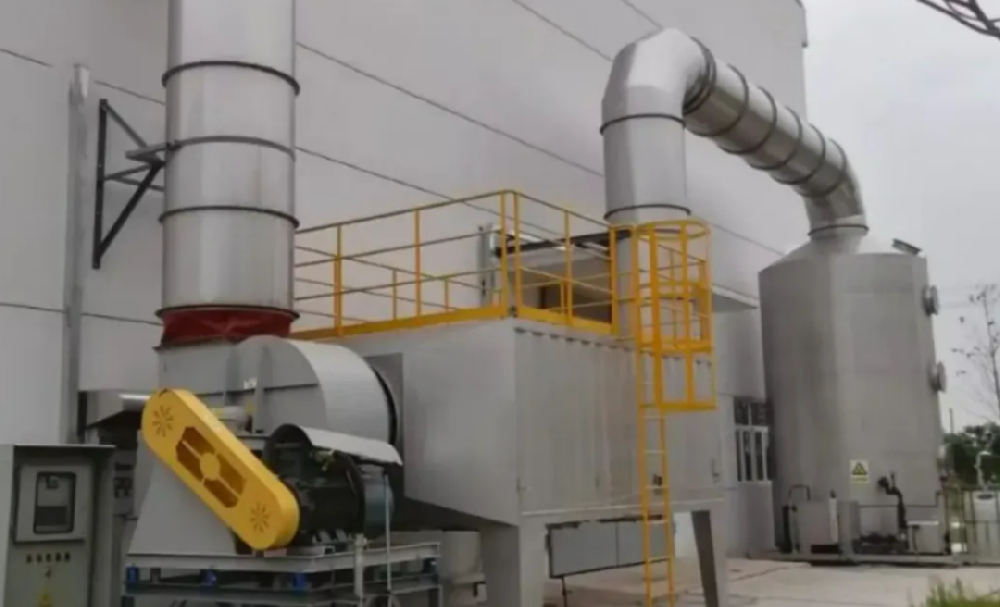
1. A temperature and humidity meter or a temperature and humidity sensor should be installed at the front end of the air inlet of the activated carbon adsorption device to monitor whether the waste gas entering the activated carbon box meets the requirements.
2. The adsorption layer of the activated carbon adsorption device should be equipped with a differential pressure gauge or a manometer. When the pressure is lower than the initial value or reaches 1.5 to 2 times the initial value, the activated carbon should be inspected and replaced in a timely manner.
3. Sampling ports should be set up on both the intake and exhaust pipes of the activated carbon adsorption device in accordance with relevant standards, and the inlet concentration should be simultaneously detected in accordance with the self-detection plan of the pollutant discharge permit to facilitate the detection of the adsorption efficiency of activated carbon.
4. The fan should be installed at the rear end of the activated carbon adsorption VOCs device to create a negative pressure in the device and ensure that no pollution-free gas leaks out of the adsorption device as much as possible.
5. According to the characteristics of the imported exhaust gas, the activated carbon adsorption device should be equipped with safety devices such as fire dampers, flame arrestors and emergency sprinklers if there is a risk of combustion or spontaneous combustion.